Our team spends a good part of every week talking to people who have reached the same point. They have been sitting at a desk for years, whether in an office or at home, and their body has started sending signals they can no longer ignore. A sore lower back. Stiff shoulders by mid-afternoon. A chair that looked the part in the showroom but never quite fits once it is home. This is usually where the search for a genuine ergonomic office chair begins, and it is a conversation we have with customers across New Zealand every day.
Not every chair labelled ergonomic actually supports the body the way it should. Customers tell us this often, usually after buying a chair based on looks or price alone and finding it does little for the discomfort that sent them looking in the first place. This guide draws on what our team sees and hears in these conversations, so you can choose a chair that works for the way you actually sit and work each day.
What Does “Ergonomic” Actually Mean?
When customers ask us to explain ergonomic chair design in plain terms, we describe seating built around how the body moves and holds itself through the working day. A genuinely supportive chair adjusts to the person using it, supporting the spine’s natural curve and letting the hips, knees and elbows rest at healthy angles. A standard office chair is usually built to one fixed shape, which limits how well it suits different body types and working styles. Our team hears this gap described in dozens of ways: a chair that fits a colleague perfectly but leaves someone else reaching for a cushion by lunchtime.
Key Features of a Supportive Ergonomic Chair
A handful of features come up again and again when our team talks customers through what separates a genuinely supportive ergonomic office chair from one that simply carries the label.
Lumbar support: a proper lumbar support chair holds the lower back’s natural curve, reducing strain during long periods of sitting. This is the single feature our team is asked about most.
Adjustability: multiple adjustment points, including seat height, tilt, armrests and lumbar depth, let the chair adapt to the body. This is why an adjustable office chair is central to good ergonomic design, and it is often the first thing our team checks with a customer during a fitting.
Cushioning and material: breathable mesh backs support airflow, while supportive foam seats hold their shape over time. Both appear across ergonomic chairs in mesh and standard foam finishes, and customers often have a strong personal preference once they have tried both.
Base and mobility: a stable five-point base with smooth castors allows easy movement without compromising support.
Choosing the Right Chair for Your Desk and Work Style
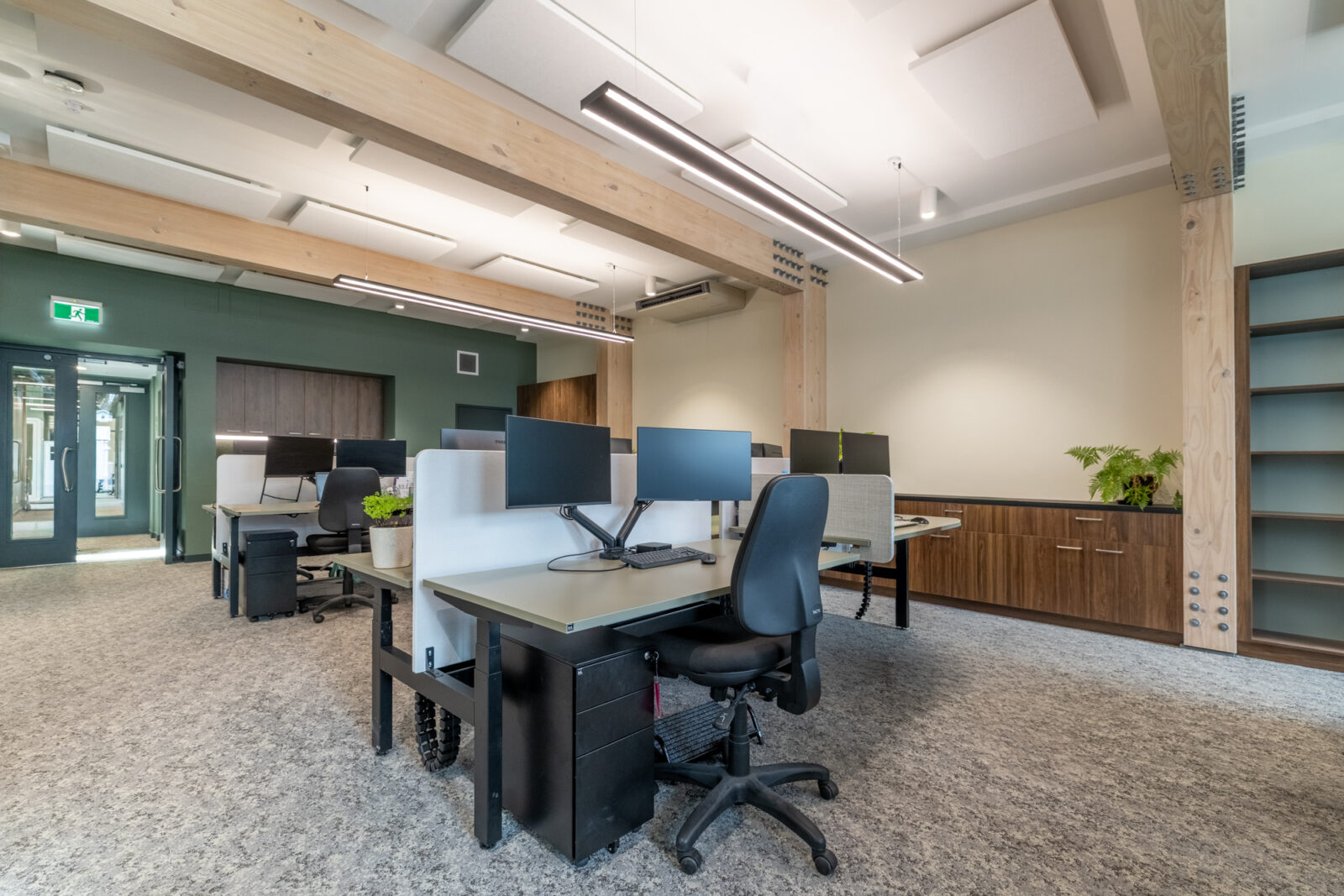
A chair works together with your desk and monitor height, so our team always considers the two together. Elbows should sit level with the desk, and the top of the monitor screen should sit roughly at eye level.
Fit is personal, and this is the point our team makes most often to customers who are unsure where to start. A specification sheet can describe a chair’s features, but it cannot tell you how that chair will feel after three hours of real use. This is exactly why our team built the Trial Chair service.
How Our Trial Chair Service Works
Our team hears the same hesitation from customers time and again: how do you choose a chair you will sit in for years without ever sitting in it first? His answer is simple. Keith brings the chair to you, so you can try it in your own space, at your own desk, doing your own work.
Once a chair is dropped off, customers have seven days to live with it properly. That means enough time to notice how the lumbar support feels by the end of a long Wednesday, or whether the armrests sit at the right height for the desk at home. If the first chair is not quite right, customers can try another until they find the perfect fit.
Different roles and spaces call for different chair types, and this is something our team walks through with almost every customer. Kneeling ergonomic chair designs suit people who want to shift their sitting angle through the day, while executive office chair options are often chosen for boardrooms and senior offices. For focused desk work, ergonomic chair and computer setups typically prioritise arm and wrist support. For home workspaces, ergonomic chairs designed for a home office tend to be more compact, which suits smaller desks and shared living spaces. Colour and finish also matter for shared or client-facing areas, and our team often guides customers toward white and neutral tones to fit modern interiors.
When comparing chairs, our team encourages customers to focus on adjustability and proven comfort over styling alone. This matters especially for anyone choosing a chair for back pain, where lumbar support and seat depth carry more weight than appearance. It is also worth checking warranty terms and ongoing local support alongside price.
Combine the Right Chair with Better Habits
Even the most supportive chair cannot fully offset a full day of stillness, and our team is always upfront about this with customers. Alongside a well-fitted computer chair, short movement breaks every hour help maintain circulation and reduce stiffness. Simple long sitting posture tips, such as keeping feet flat on the floor and shoulders relaxed, work best when paired with a chair that already supports good positioning.
A Supportive Chair Supports Your Working Day
If you are exploring ergonomic office chair options or planning a wider workspace upgrade, the team at Int. Workspaces are here to help. Get in touch to trial supportive seating in person through our Trial Chair service.

Frequently Asked Questions
What defines an ergonomic chair?
An ergonomic chair is designed to adjust to the person using it, supporting the spine, hips and arms in a natural position rather than forcing the body into a fixed shape.
Are ergonomic chairs good for your back?
Yes. A well-designed ergonomic chair is often considered the best office chair for back pain, since it supports the lower back’s natural curve, reducing strain and lowering the risk of discomfort from prolonged sitting.
Do ergonomic chairs help posture?
They can. Adjustable lumbar support, seat height and armrests help keep the spine aligned, which supports better posture through the day.
Are ergonomic chairs worth it?
For anyone sitting for several hours a day, an ergonomic chair is generally considered a worthwhile investment, since it supports comfort, posture and long-term health.
How much do ergonomic chairs cost?
Prices vary depending on adjustability, materials and brand, ranging from entry-level options through to premium executive and specialist chairs.
How long do ergonomic chairs last, and how often should office chairs be replaced?
A quality ergonomic chair can last for many years with regular use and proper care. It is worth reviewing a chair for replacement once the cushioning, tilt mechanism or support features begin to wear.
How does the Trial Chair service work?
We send a chair directly to you so you have time to test it in your own space. If you decide to purchase it, you simply keep the chair. If it is not the right fit, we arrange for a courier to collect it at no cost.
What are the benefits of ergonomic chairs?
Benefits include reduced back and neck strain, better posture, improved comfort during long tasks and, for many people, better focus through the working day.
Other resources
View all resources